
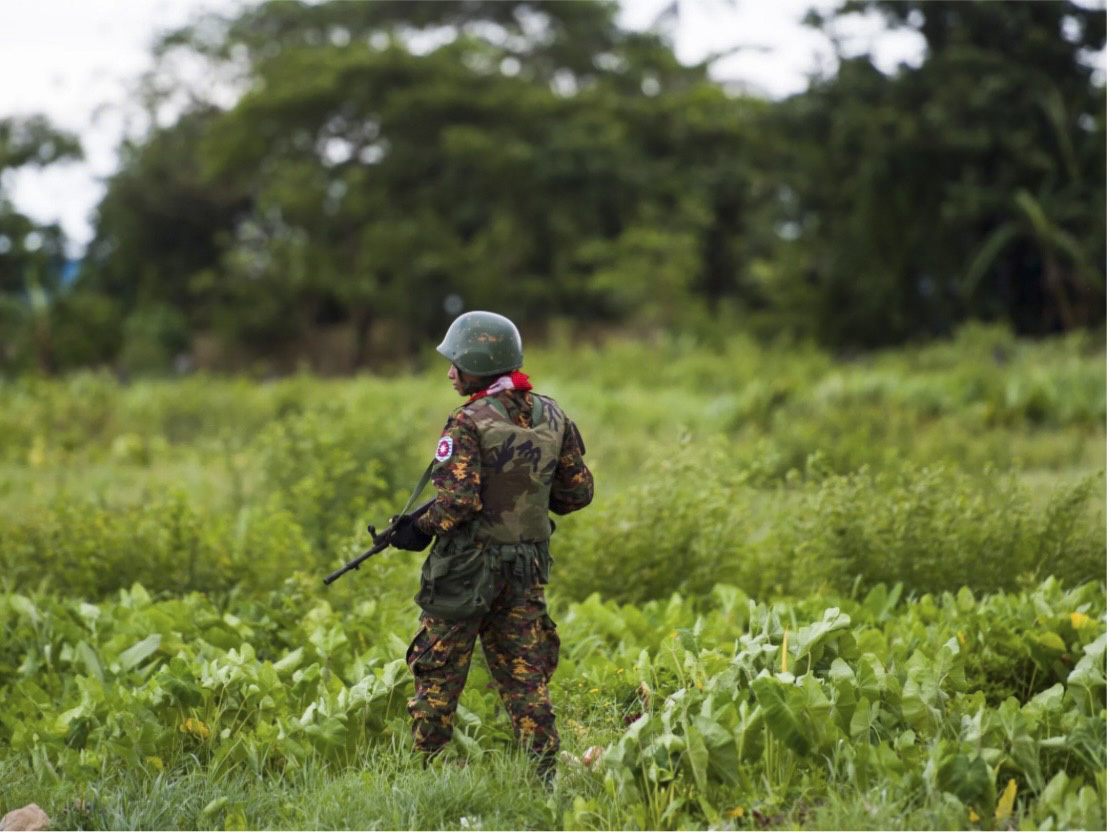

By Arakan Journal Staff – October 22, 2026
An international human rights lawyer has called for a broader investigation into alleged abuses against Rohingya in Myanmar’s Rakhine State, arguing that the Arakan Army’s restrictions on movement, forced labor, land seizures, and other reported practices may amount to crimes against humanity.
In an analysis published on October 21, 2026, on Opinio Juris, international human rights lawyer Ashley S. Kinseth argues that the allegations should be examined as a pattern of persecution rather than as isolated incidents of violence. She says the administrative measures imposed on Rohingya civilians, including travel permits, taxation, and compulsory labor, warrant greater international scrutiny.
According to Kinseth, Rohingya residents in northern Rakhine face significant restrictions on their movement and must pay for permission to travel between villages. Some are charged substantial fees for travel documents, while households face taxes on property and livelihood assets, including homes, shops, boats, livestock, and agricultural land.
The lawyer notes that many of these restrictions existed before the Myanmar military’s 2017 crackdown, which drove more than 700,000 Rohingya into neighboring Bangladesh. However, she argues that the Arakan Army, which seized control of much of Rakhine State in 2024, has continued or expanded some of these practices while introducing additional measures affecting the community.
Kinseth contends that the combined impact of these restrictions and financial demands must be assessed in the context of the wider treatment of Rohingya civilians.
The analysis also examines allegations that Rohingya have been compelled to perform unpaid labor for the Arakan Army, including construction work and other tasks assigned through village-level quotas.
Kinseth cites reports of displaced Rohingya being confined in a camp at Nassawr Para following violence in Hoyyar Siri.
The lawyer also draws on findings attributed to the Independent Investigative Mechanism for Myanmar and the UN human rights office concerning alleged forced displacement, sexual violence, summary executions, and the destruction or repurposing of Rohingya property.
Her analysis highlights allegations that Rohingya have been prevented from returning to their former homes while non-Rohingya communities have been settled on land previously occupied by Rohingya families. The reports also raise concerns about the destruction of religious sites and changes to village names.
Leave a Reply