
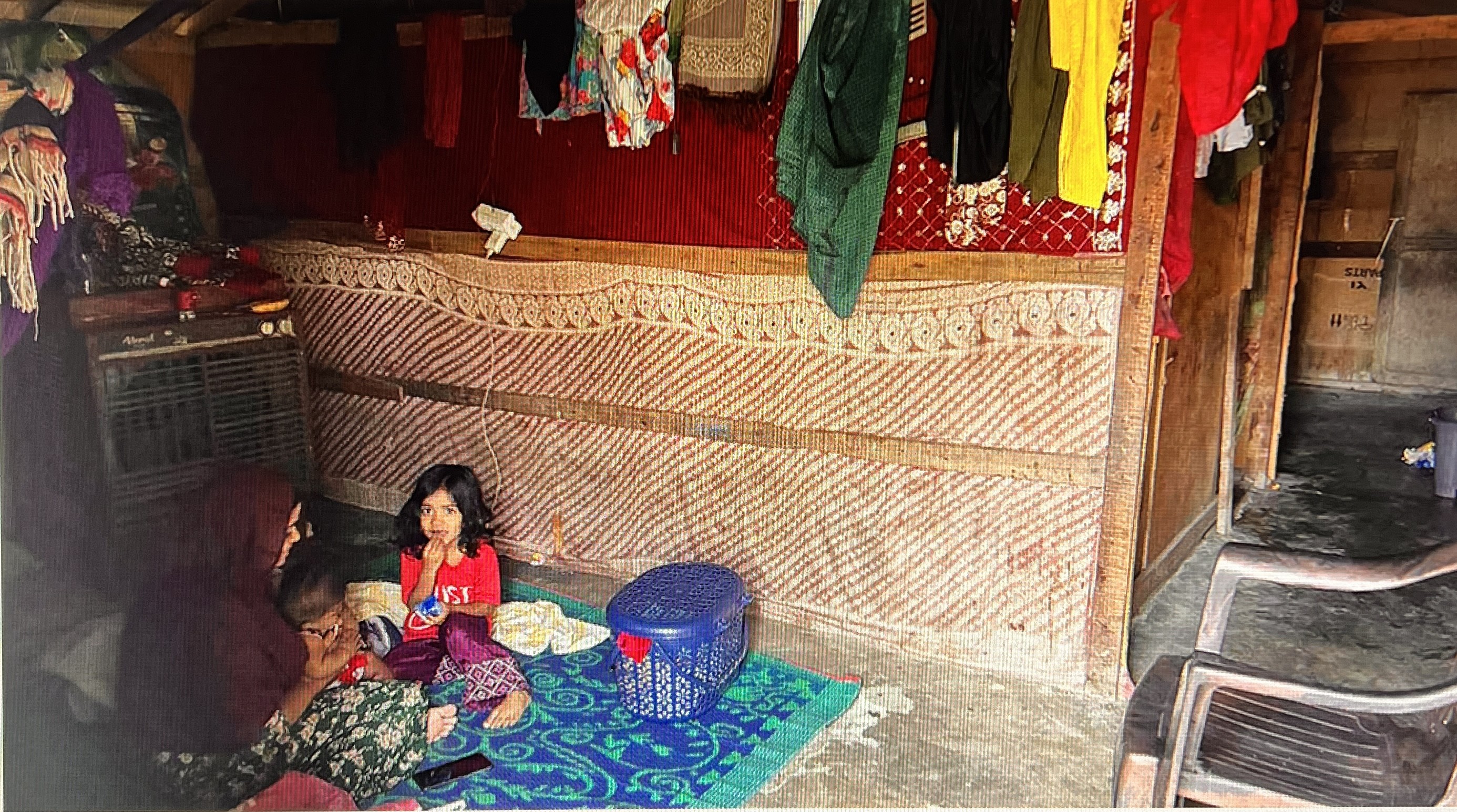

Rashida Begum, 25, with her children in a tin-and-wood shed in an informal Rohingya refugee settlement in Karyani Talab, Jammu, northern India.
By Arakan Journal Staff – October 30, 2026
JAMMU, India—October 29, 2026—Community health workers are helping Rohingya families in Jammu keep their children’s vaccinations on track, but moves from informal settlements threaten to disrupt the contact on which that care depends.
According to reporting by VaccinesWork, government health centers and frontline workers have made routine immunization accessible to refugee children despite their families’ uncertain residency status. Outreach in settlements and reminders about missed appointments and vaccination records have helped sustain that access.
Care built on regular contact
For Rashida Begum, who lives with her two children in a makeshift shelter in Karyani Talab, contact with a community health worker has helped her understand when her children need vaccines. She fled Myanmar’s Rakhine State with her parents at the age of three and has spent most of her life in India without secure residency.
Rashida first learned about childhood immunization during her first pregnancy. By the birth of her second child, she was familiar with the vaccinations needed. She told Vaccines Work that an outreach worker would visit her shelter when a dose was missed.
Her children received immunization cards through a registration process that accepted her identification card issued by the United Nations High Commissioner for Refugees (UNHCR). Another refugee mother cited in the reporting also said her UNHCR card was sufficient to register her children for vaccination.
Outreach connects families with health centres

For Rashida Begum, who lives with her two children in a makeshift shelter in Karyani Talab, contact with a community health worker has helped her understand when her children need vaccines. She fled Myanmar’s Rakhine State with her parents at the age of three and has spent most of her life in India without secure residency.
Rashida first learned about childhood immunization during her first pregnancy. By the birth of her second child, she was familiar with the vaccinations needed. She told VaccinesWork that an outreach worker would visit her shelter when a dose was missed.
Her children received immunization cards through a registration process that accepted her identification card issued by the United Nations High Commissioner for Refugees (UNHCR). Another refugee mother cited in the reporting also said her UNHCR card was sufficient to register her children for vaccination.

Relocation puts continuity at risk
That contact is becoming harder to sustain as some Rohingya families are being asked by landowners to leave informal settlements. Moves into rented accommodation in different parts of Jammu create a new challenge for workers who have spent years locating households and maintaining vaccination records.
When a family moves, health workers must find its new address to continue follow-up. The disruption could increase the risk of children missing doses, particularly where parents are unfamiliar with services in their new neighborhoods.
The experience in Jammu shows how community outreach can connect refugee children with routine healthcare even when their families lack secure residency. As housing pressures force further moves, maintaining those connections will remain central to keeping vaccination services within reach.
Source: VaccineWork.


Leave a Reply