

UN officials warn the Myanmar crisis is worsening as Rohingya face continued displacement and persecution.
By Arakan Journal Staff – October 31, 2026
Senior United Nations officials have warned that Myanmar’s political, humanitarian, and human rights crises continue to deteriorate, highlighting escalating military airstrikes, widespread civilian suffering, growing displacement, and the absence of conditions for the safe return of Rohingya refugees.
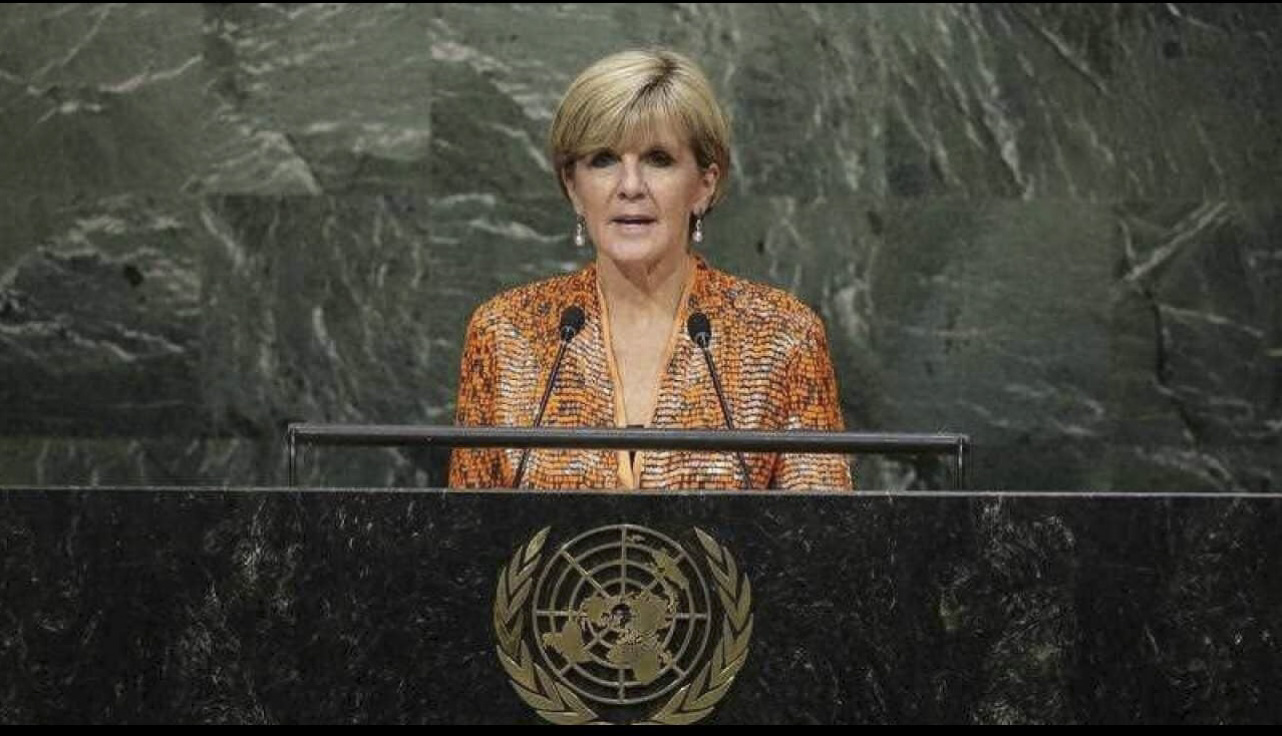
Speaking during the 29th meeting of the United Nations General Assembly’s Third Committee at its 81st session, three senior UN representatives—the Special Envoy of the Secretary-General, Julie Bishop; the Independent Investigative Mechanism for Myanmar (IIMM) head, Nicholas Koumjian; and Special Rapporteur on Myanmar, Kelley E. Currie—briefed member states on the situation across the country.
The October 2026 meeting focused on the deteriorating security situation, alleged international crimes, humanitarian access, accountability, and the continuing plight of Rohingya refugees.
UN Special Envoy: Conditions for Rohingya return do not exist
Special Envoy Julie Bishop told the committee that the humanitarian situation remained dire, especially for Rohingya refugees and those still living in Rakhine State.
She said Bangladesh was hosting more than 1.3 million Rohingya refugees from Myanmar and described the suffering she had seen on a recent visit to the refugee camps in Cox’s Bazar.
Bishop said Rohingya left in Rakhine State were still at risk of armed conflict, landmines, restrictions on movement, forced recruitment, and severely limited access to essential services.
She also cited the shifting territorial landscape in Rakhine State, where the Arakan Army now controls 14 of the state’s 17 townships.
The Special Envoy said that any possible return of refugees would require security guarantees from the Arakan Army, which now controls much of the territory.
“Conditions for safe, voluntary, dignified, and sustainable return do not exist,” Bishop told the committee.
She cautioned that attempting to repatriate refugees without credible safety guarantees could violate international protection obligations.
Bishop also urged countries seeking to normalize relations with Myanmar’s military authorities to use diplomatic engagement to secure concrete concessions, including an end to violence, unrestricted humanitarian access, and the release of arbitrarily detained prisoners.
IIMM documents growing evidence of international crimes
Nicholas Koumjian, head of the Independent Investigative Mechanism for Myanmar, told member states that the situation had further deteriorated, with increasing numbers of civilians becoming victims of alleged war crimes and crimes against humanity.
He said the Myanmar military was increasingly relying on aerial attacks, including drone strikes, which have affected homes, hospitals, religious sites, displacement camps, and schools.
Koumjian highlighted several recent incidents, including the bombing of a monastery in Sagaing Region and a church complex in Chin State. He also referred to an airstrike on a market in Rakhine State last month that killed more than 50 people.
The mechanism has also expanded its investigations into torture in military-run detention facilities, sexual violence, and other serious abuses.
Koumjian said the IIMM collected evidence from more than 1,600 sources and gathered over 750 witness testimonies.
The evidence includes photographs, videos, satellite and geospatial imagery, social media material, and financial records.
He confirmed that the mechanism had shared evidence and analytical findings with authorities pursuing accountability through the International Criminal Court, the International Court of Justice, and Argentina’s Federal Court.
The IIMM has also provided information to authorities in several countries investigating crimes committed since the February 2021 military takeover.
Koumjian called on member states to cooperate with investigations, protect witnesses, and support efforts to ensure that those responsible for serious international crimes are held accountable.
The special rapporteur condemns systematic attacks against civilians
Special Rapporteur Kelley E. Currie delivered a particularly strong assessment of the military’s conduct and the international response to Myanmar’s crisis.
She recalled the military’s 2017 operations against the Rohingya, which forced more than 700,000 people to flee to Bangladesh.
Currie said the same military commander associated with those operations, Min Aung Hlaing, had subsequently taken power following the 2021 military coup and declared himself president in 2026.
She argued that the military’s so-called 100-day program had coincided with intensified airstrikes, artillery attacks, and arson against civilians.
“The Myanmar military intentionally targets civilians as a matter of doctrine and strategy, then deliberately obstructs humanitarian operations aimed at limiting civilian suffering,” Currie told the committee.
She said military attacks had targeted markets, churches, schools, and clinics, while telecommunications blackouts, movement restrictions, and checkpoints obstructed humanitarian aid.
The Special Rapporteur also raised concerns about attacks against humanitarian workers, citing the killing of three aid workers in Dawei in July 2026 following alleged torture.
She criticized countries that were normalizing relations with Myanmar’s military leadership without demanding measurable improvements in human rights and civilian protection.
Currie urged governments to provide direct support to local civil society organizations, women’s organizations, and community-based humanitarian groups working in areas outside military control.
Myanmar representative calls for an end to military support
Myanmar’s Permanent Representative to the United Nations also addressed the meeting, accusing the military authorities of escalating attacks against civilians and committing serious international crimes.
The representative called on governments to stop supplying jet fuel, weapons, and military equipment to the military.
He also urged countries to deliver humanitarian assistance directly to local civil society organizations through cross-border channels.
Calling for international accountability, he asked the UN Security Council to refer the situation in Myanmar to the International Criminal Court and urged the international community to support justice for Rohingya victims.
He also expressed concern over the continued detention of former State Counsellor Aung San Suu Kyi, saying that a brief telephone conversation with her son did not amount to freedom.
Bangladesh urges greater international responsibility-sharing
Bangladesh’s representative highlighted the country’s prolonged responsibility for hosting more than 1.2 million Rohingya refugees.
He said escalating violence in Rakhine State, forced recruitment, arbitrary detention, sexual violence, and restrictions on humanitarian aid continued to create further displacement.
Bangladesh called for predictable and sustained international humanitarian funding, noting that the 2026 Joint Response Plan appeal had been reduced by 25 percent.
The representative stressed that Bangladesh had not created the Rohingya crisis and that a sustainable solution must address its root causes inside Myanmar.
He also urged greater international responsibility-sharing to support refugees and host communities.
In response, Currie thanked Bangladesh for its continued hospitality and agreed that the international community must provide stronger financial support rather than leaving the country to carry the burden alone.
Canada raises concerns over forced recruitment of Rohingya
Canada expressed particular concern about the military’s increasing use of forced recruitment, which it said disproportionately affected marginalized communities, including Rohingya, young people, and persons with disabilities.
Its representative also warned that Myanmar nationals returning from neighboring countries faced potential risks of forced conscription, persecution, arbitrary detention, and other human rights violations.
Canada called for stronger protection of independent journalism and improved access to reliable information in Myanmar.
The international community calls for accountability and humanitarian access
Several countries, including Japan, Australia, Poland, Switzerland, the United Kingdom, the European Union, Germany, Norway, and Ireland, expressed concern about escalating violence and civilian casualties.
They called for an immediate end to attacks against civilians, unrestricted humanitarian access, the release of political prisoners, and accountability for serious international crimes.
The European Union and its member states reiterated their support for international justice mechanisms, including the IIMM, ICC, and ICJ.
However, China, Russia, and Belarus challenged aspects of the UN assessments, arguing that the international response was politically unbalanced and that Myanmar’s sovereignty and national reconciliation should be respected.
Responding to criticism, Currie said her mandate required her to stand with victims of human rights violations rather than remain neutral regarding abuses.
She also called for stronger scrutiny of financial networks, illicit mining, trafficking, forced labor, and scam centers that generate revenue connected to Myanmar’s conflict.
The UN Special Envoy calls for an end to violence and stronger humanitarian access
In her concluding remarks, Bishop identified ending violence as the priority for resolving Myanmar’s crisis.
She also warned that landmines and unexploded ordnance, particularly in Rakhine State, would remain major obstacles to refugee returns even if the fighting stopped.
Bishop urged neighboring countries to use their influence to prevent attacks against civilians and ensure humanitarian organizations could reach communities in areas outside military control.
She further called on governments to stop supplying military equipment, particularly aviation fuel used in aerial bombardments.
The meeting concluded with renewed calls for civilian protection, humanitarian aid, international accountability, and a peaceful political solution involving all relevant stakeholders.
For the Rohingya, however, the message from the UN briefing remained clear: despite continued international diplomatic efforts, the security, freedom of movement, and protection guarantees necessary for a safe and dignified return to Myanmar have yet to be established.

Leave a Reply