
The United Kingdom has requested an emergency UN Security Council meeting to discuss the International Court of Justice’s landmark finding that Myanmar committed genocide against the Rohingya during its 2017 military crackdown.

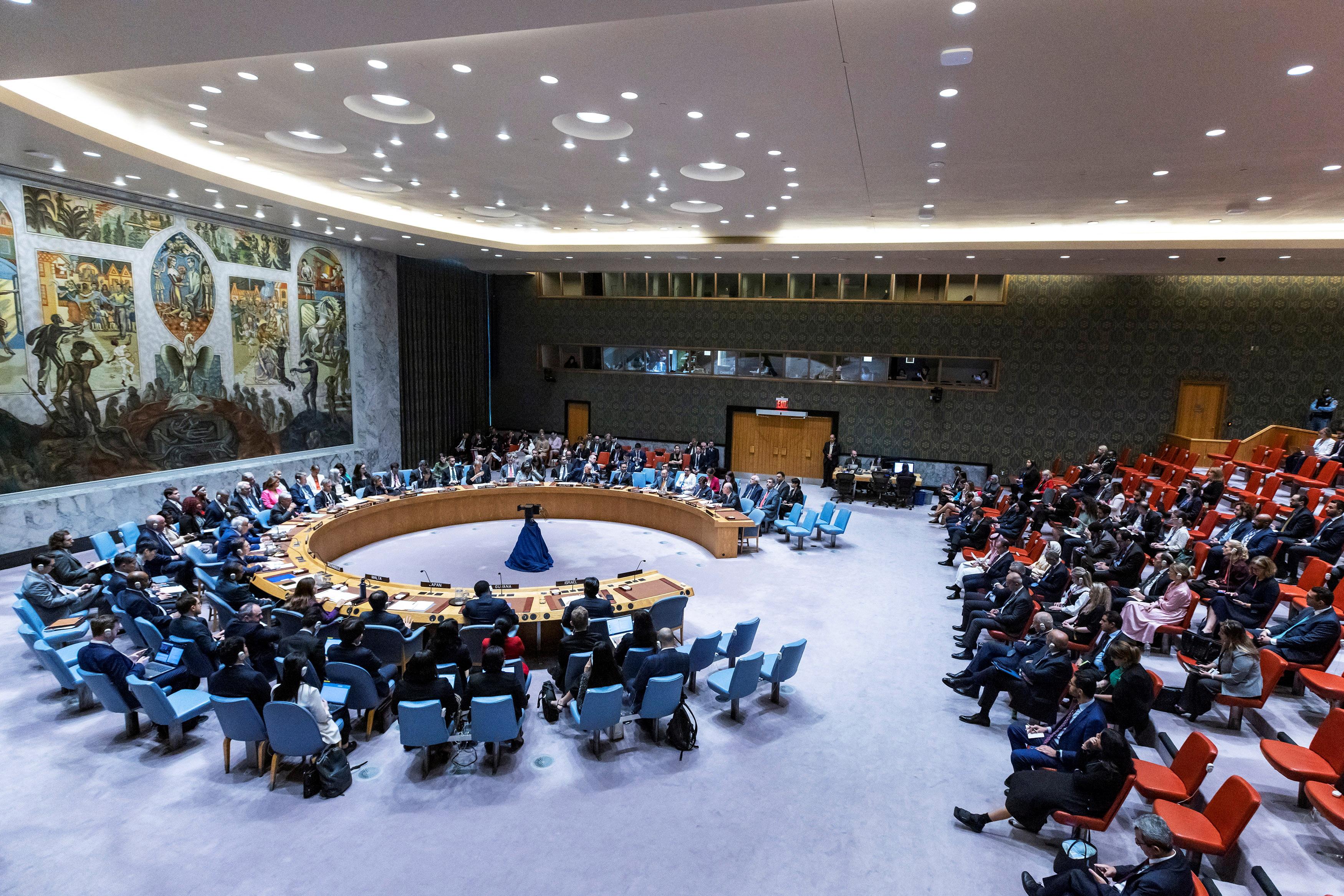
The United Nations Security Council Chamber at UN Headquarters in New York, where members meet to discuss international peace, security, and the Rohingya genocide.
Arakan Journal Staff—November 25, 2026.
NEW YORK – The United Nations Security Council (UNSC) is set to hold an emergency meeting today to discuss the International Court of Justice’s (ICJ) historic ruling holding Myanmar responsible for genocide against the Rohingya.
The meeting was convened at the request of the United Kingdom, whose mission to the United Nations in New York announced the development in a post on X on Tuesday night.
The UK has also called for another Security Council meeting in December, signalling its intention to keep international pressure on Myanmar to ensure accountability for crimes against the Rohingya and address the continuing humanitarian crisis.
On November 19, the ICJ delivered a landmark judgment in a case brought by The Gambia, finding Myanmar responsible for genocide against the Rohingya during its 2017 military operations in Rakhine State, in violation of the 1948 Genocide Convention.
The ruling marked the first time the world court had found a state responsible for genocide. Evidence examined by the court included survivor testimonies, graphic documentation, and reports by international investigators detailing widespread atrocities during the military crackdown.
The evidence documented the burning and destruction of Rohingya villages, the killing of men and boys, and the rape of women and girls. The court cited evidence showing that approximately 10,000 Rohingya were killed during the military operations. Myanmar has denied the allegations.
In its judgment, the ICJ ordered Myanmar to take immediate measures to prevent further violations of the Genocide Convention, investigate individuals suspected of committing genocidal acts, and prosecute and punish those responsible.
The court also directed Myanmar to provide guarantees that such atrocities would not be repeated, facilitate the safe, voluntary, and dignified return of displaced Rohingya, reunite separated families, and provide compensation for the damage caused.
Myanmar was further ordered to submit a report within two years detailing the measures taken to implement the judgment, including arrangements for restitution and compensation.
The ruling is final and binding on the parties, with no possibility of appeal.
UK Announces Sanctions and Genocide Recognition
Following the ICJ judgment, the British government announced a series of measures targeting Myanmar’s military leadership.
UK Foreign Secretary Ed Miliband told the House of Commons that Britain would formally recognize the atrocities committed against the Rohingya as genocide.
London also announced travel bans and asset freezes against five senior Myanmar military officials. In addition, the government has initiated legislation to prohibit the supply and export of aviation fuel to Myanmar to prevent military airstrikes against civilians. Last week, the UK expelled Myanmar’s defense attaché from London as part of its response to the military’s actions.
More Than One Million Rohingya Remain Displaced
The Myanmar military’s August 2017 crackdown forced more than 700,000 Rohingya to flee their homes in Rakhine State and seek refuge in neighbouring Bangladesh.
Including those displaced by earlier waves of persecution, more than one million Rohingya now live in Bangladesh, most of them in overcrowded refugee camps in Cox’s Bazar, while others are sheltering on Bhasan Char island.
The refugees are still heavily dependent on international humanitarian aid and face severe restrictions on freedom of movement, livelihood opportunities, and access to formal education.
Meanwhile, the Rohingya still in Myanmar continue to face discrimination and restrictions on basic rights, including citizenship, healthcare, and education.
The Security Council meeting comes at a critical moment for the Rohingya, as international attention turns to whether the ICJ’s landmark judgment will translate into concrete measures to secure justice, accountability, and the safe return of displaced communities.
Leave a Reply