By Arakan Journal Staff – October 15, 2026
COX’S BAZAR, Bangladesh—Portable solar panels are helping Rohingya refugee families in Bangladesh meet basic electricity needs, letting children study after dark and families charge mobile phones and run fans. But as humanitarian agencies face funding constraints, expanding access to the technology is still a challenge.
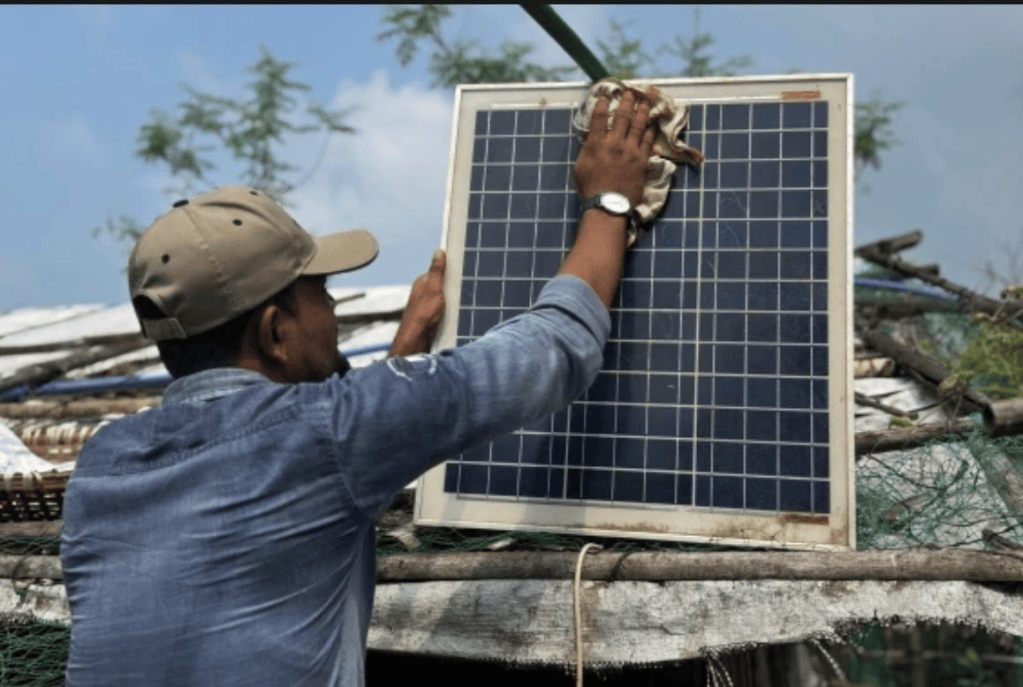
In Teknaf, Cox’s Bazar, Mohammed Saber, a 35-year-old Rohingya refugee who fled Myanmar during the military crackdown in 2017, relies on a small solar panel installed on the roof of his family’s shelter. The panel was provided as humanitarian assistance about six years ago and has since become the family’s main source of electricity.
Saber told the Associated Press that the system allows his family to use lights at night, charge phones, and keep children studying after sunset. During hot weather, it also powers fans.
His experience illustrates how relatively small renewable-energy systems can improve daily life for displaced families living in camps with limited access to reliable electricity.
Solar power gains importance in humanitarian response
Portable solar kits are increasingly being used in emergencies because they can be used independently of conventional electricity networks. They can be deployed in refugee camps, conflict-affected areas, and communities recovering from natural disasters.
Sarah Rosenberg-Jansen, a research fellow at the Stockholm Environment Institute, told the Associated Press that these systems can be particularly useful when floods, damaged roads, or conflict make it difficult to deliver conventional energy supplies.
The kits range from simple solar lanterns to larger household systems and other solar-powered equipment. Their portability and ability to recharge make them suitable for locations where electricity infrastructure is limited or damaged.
Lower manufacturing costs and improvements in technology have also made solar equipment more accessible than it was in the past. Unlike diesel generators, solar systems do not require a continuous supply of fuel, which can be expensive and difficult to transport into remote or emergency-affected areas.
Funding shortages threaten progress
Despite these advantages, humanitarian organizations face obstacles in expanding solar-energy programs. Existing aid operations often depend on established systems involving diesel generators, long-term contracts, and conventional supply chains.
Switching to renewable energy requires investment, technical ability, and distribution networks that can function in difficult operating environments.
Mark Gibson of the Global Platform for Action, which promotes access to affordable and reliable energy, highlighted the challenges of integrating solar technology into humanitarian operations. Aimee Jenks, a program leader at the organization, also warned that reductions in international donor funding have affected technical capacity and slowed progress.
The financial challenge extends beyond refugee camps. Aid organizations working in conflict zones and disaster-hit communities are struggling to meet growing demand for basic energy services.
The Associated Press also reported that a US-based nonprofit providing solar kits to families affected by the war in Ukraine had distributed more than 3,200 kits, with a waiting list of about 20,000 families. The figures illustrate the gap between demand for emergency energy help and the resources available to provide it.
A basic need for displaced communities
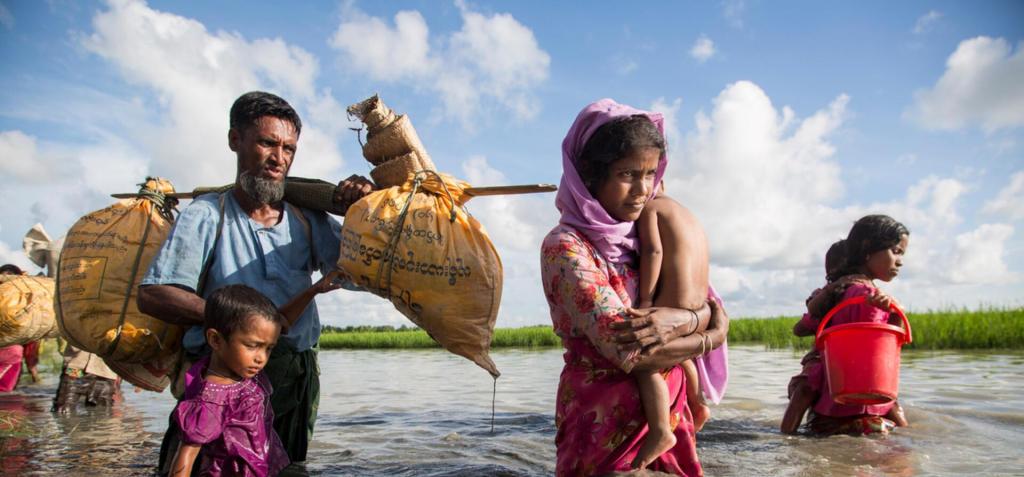
More than one million Rohingya refugees are still in Bangladesh after fleeing persecution and violence in Myanmar. Many continue to depend on humanitarian assistance for essential needs while prospects for safe and sustainable return remain uncertain.
Solar kits cannot resolve the wider challenges facing the Rohingya population, including displacement, restricted opportunities, and dependence on aid. However, they can improve living conditions while refugees await a durable solution.
As humanitarian needs continue, expanding access to affordable and reliable energy will depend on sustained funding, practical distribution systems, and greater recognition of electricity as an essential part of emergency help.
Source: Associated Press reporting by Victoria Milko, published October 14, 2026. This Arakan Journal article is based on the published report and is not original field reporting.


Leave a Reply