Rohingya Community Raises Concern Over Increasing Anti-Rohingya Content in Malaysia
By Arakan Journal – September 14, 2026
KUALA LUMPUR, Malaysia — Concern is growing among members of Malaysia’s Rohingya community over social-media content that repeatedly identifies, confronts and negatively portrays Rohingya people, with community advocates warning that such content could contribute to hostility, harassment and discrimination.
Malaysian social-media personality Awie MBR, also known as Abang Koroy, has increasingly focused his online content on Rohingya and other foreign-national issues. Malaysian media have reported on several of his videos and public statements concerning the Rohingya community.
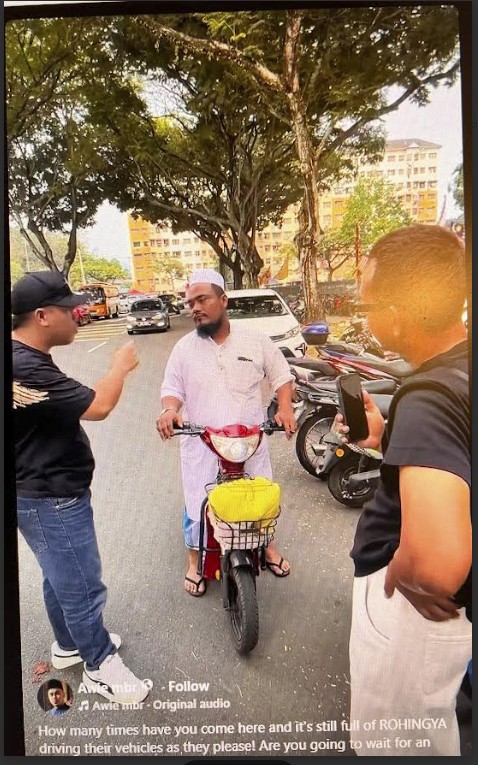
One recent Facebook video attributed to Awie MBR and identified as being filmed in Shah Alam, Malaysia, carries a title referring specifically to Rohingya people riding motorcycles and raises questions about their presence in the area. The wording repeatedly singles out “ROHINGYA” rather than addressing an individual incident without reference to ethnicity.
The video is part of a broader pattern of social-media activity in which Awie MBR has publicly sought information about where Rohingya people live. In a recent Threads post, his account asked users to share where Rohingya people stay in the Shah Alam/Klang area and requested map details.
Growing concern over targeted content
The publication of videos identifying locations where Rohingya communities live or gather has raised concerns among community members about whether vulnerable refugees may become targets of public hostility or harassment.
A people displaced by persecution
The debate over the Rohingya community in Malaysia should also be understood in the context of the history that forced millions of Rohingya from their homes.
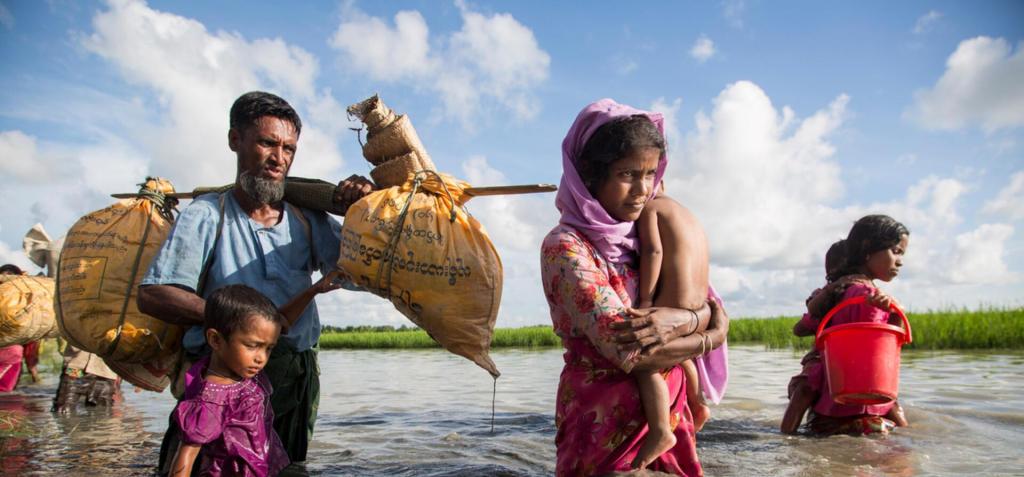
The Rohingya are a stateless ethnic minority from Myanmar’s Rakhine State who have experienced decades of discrimination, persecution and violence. The largest displacement occurred after the Myanmar military’s security operations began in August 2017. More than 750,000 Rohingya fled across the border into Bangladesh following the violence and widespread human-rights abuses.
The United Nations Independent International Fact-Finding Mission on Myanmar documented grave violations committed against the Rohingya and concluded that Myanmar’s military leaders should be investigated for genocide, crimes against humanity and war crimes. The mission also described the situation as involving serious violations of international law.
For many Rohingya, displacement was not a choice. Families were separated, villages were destroyed and people fled with little more than what they could carry. Many crossed borders seeking safety, while others eventually found themselves scattered cross countries including Bangladesh, Malaysia, Indonesia, Indian and other parts of the world. UNHCR continues to identify Rohingya refugees and asylum-seekers in several countries across the region.
Refugees deserve dignity, not collective punishment
The fact that Rohingya people are refugees should never be used as a reason to deny their humanity.
Rohingya people, like members of Malaysia’s host communities, have rights to live with dignity, safety and basic respect. Individual conduct, where it occurs, should be addressed on an individual basis and through appropriated legal or administrative channels. It should not become a justification for humiliating, threatening or collectively targeting an entire ethnic community.
Malaysia is home to people from many backgrounds, and public debate about immigration, refugee refugee policy, employment, public spaces and compliance with Malaysian law is legitimate. But that debate should not descend into ethnic hostility.
For Rohingya refugees who have already experienced persecution and forced displacement, being publicly identified, insulted or harassed because of their ethnicity can deepen the insecurity from which they originally fled.
The Rohingya do not ask to be treated as more important than their host communities. They ask to be treated as human beings.
They deserve the same fundamental dignity, safety and respect that human being deserves.
A message against collective hatred
The experience of the Rohingya should also serve as a warning about the consequences of collective hatred. A community should not be judged solely by the actions of particular individuals, jus as the actions of one person should never be used to condemn an entire ethnic population.
Social-media influencers have a powerful ability to shape public attitudes. With that influence comes responsibility. Videos, photographs, captions and public statements that repeatedly identify an ethnic or refugee community can affect how thousands of people perceive and interact with that community.
The answer to social problems should therefore be law, evidence and individual accountability-not collective hostility.
For Rohingya refugees living in Malaysia, the hope is simple: to work, raise their families, educate their children and live peacefully alongside the Malaysian communities that surround them.
After being forced from their homeland by violence and persecution, they should not have to live in fear of becoming targets of hatred whenever they seek safety.
Every Rohingya is a human being first. Refugee status does not take away human dignity, and displacement does not take away the rights to live without hatred, humiliation or harassment.
In August, Malaysian newspaper Sinar Harian reported that a video uploaded by Awie MBR showed more than 30 people believed to be Rohingya gathered at a public park in Taman Wilayah, Selayang. The report said some were playing football while families were having picnics and children were using playground facilities. The video generated significant reactions on social media, including comments portraying the Rohingya presence as taking over public spaces.
Another Malaysian report quoted Awie MBR describing the situation as more than simply the presence of refugees and alleging that the area had become subject to “invasion” or “occupation.” Those claims were presented as his allegations rather than independently established facts.
From criticism to collective targeting
There is a legitimate public discussion in Malaysia about immigration, refugee policy, public facilities, undocumented work and compliance with Malaysian law.
However, critics of the increasingly confrontational social-media approach argue that these issues should not become a justification for collectively portraying an entire ethnic community as criminals, intruders or a threat.
A person’s alleged actions should be addressed individually and, where appropriate, through the relevant authorities. Refugees should not be collectively blamed for the conduct of particular individuals.
The concern is particularly serious when social-media content identifies places where members of a vulnerable community live or gather. Repeatedly directing public attention toward an ethnic group can potentially expose individuals—including women and children—to verbal abuse, intimidation or discrimination.
Rohingya refugees already face vulnerability
The Rohingya are a stateless ethnic minority from Myanmar who have experienced decades of persecution and displacement. Malaysia has become home to a substantial Rohingya refugee population, despite the community’s difficult legal and social circumstances.
For people who have already fled violence and persecution, the prospect of being publicly identified, followed, confronted or recorded can create additional fear and insecurity.
Community advocates say social-media influencers have a particular responsibility because their posts can reach large audiences and influence public perceptions.
Calls for responsible social-media reporting
The Rohingya community and its supporters are calling for greater responsibility in online discussions concerning refugees and foreign nationals.
They argue that criticism of government policy or individual misconduct should be evidence-based and should not turn into collective condemnation of an ethnic group.
They are also urging Malaysian authorities and social-media platforms to pay attention to content that may cross the line from legitimate public debate into targeted harassment, intimidation or incitement against vulnerable communities.
Awie MBR has publicly presented himself as an outspoken commentator on issues involving Rohingya and foreign nationals and has also said he has faced threats because of his content. Malaysian media reported in July that he discussed his views on Rohingya-related issues and alleged that he had received threats, which he said led him to make a police report.
Those claims should also be taken seriously. Opposition to harassment must apply to everyone: threats against Awie MBR or anyone else are unacceptable, just as harassment or intimidation directed at Rohingya people would be.
The central issue is therefore not whether Malaysia can debate refugee and immigration policy—it can and should—but whether that debate can take place without turning an entire ethnic community into a target.
Arakan Journal believes that public discussion of the Rohingya issue should be based on verified facts, individual accountability and respect for human dignity, rather than collective blame or hostility toward an entire community.
Arakan Journal has sought to distinguish between verified events, statements attributed to Awie MBR, and allegations made by community members. Awie MBR should be given an opportunity to respond to any specific allegations of harassment or intimidation before they are presented as established fact.


Leave a Reply