By Arakan Journal Staff
September 22, 2026
COX’S BAZAR, Bangladesh – A 22-year-old Rohingya poet and teacher living in Bangladesh’s refugee camps has published his first poetry collection, using literature to document displacement, memory, culture and everyday life in a community shaped by years of forced exile.
Ro Hefzu’s 148-page collection, Still I Breathe: Voices the World Must Hear, was published earlier this year and formally launched at a literary gathering in Cox’s Bazar on August 14. The event was supported by PEN International and its Young Writers Committee.
Originally from Kyaung Taung village in Myanmar’s Buthidaung Township in Rakhine State, Hefzu now lives in southeastern Bangladesh, where he teaches Rohingya children and young people in the refugee settlements.
His poems address experiences of exile and persecution while also exploring friendship, love, education, cultural celebrations, and efforts to preserve the Rohingya language. The collection therefore goes beyond accounts of displacement to reflect the aspirations and cultural identity of a younger generation of Rohingya refugees.
The book was supported through Rohingya Futures, a project focused on publishing works by Rohingya authors, with assistance from researcher Dr. Ronan Lee.
Hefzu had previously connected with the Tomorrow Club, a PEN International-associated platform that highlights young writers and creative voices affected by conflict, displacement, and repression. The platform later featured his poetry and an interview with him.
According to the account of the book launch, Hefszu contacted PEN International after publication because he could not afford to obtain copies of the book for friends and members of his community in the camps. PEN subsequently supported the Cox’s Bazar launch, where copies were printed and distributed with assistance from Rohingya writer Mayyu Ali.
Ege Dundar, a writer and activist and a member of PEN International’s board, addressed the gathering remotely. Dundar, who leads the revived Tomorrow Club, emphasized the role of creative writing in connecting young people across borders.
“By writing, you resist cultural erasure,” Dundar told Hefzu during the event, according to the account provided.
Bangladeshi journalist Redwan Ahmed, who works with young Rohingya writers and collaborates with the Tomorrow Club, described Hefzu’s publication as significant because Rohingya refugees have often been represented primarily through accounts of humanitarian crisis.
Ahmed said writers such as Hefzu allow Rohingya people to present their own experiences, including their memories, relationships, ambitions, and cultural identity.
A generation growing up in displacement
Hefzu’s story reflects the circumstances of a generation of Rohingya children and young people who have spent much of their lives displaced from Myanmar.
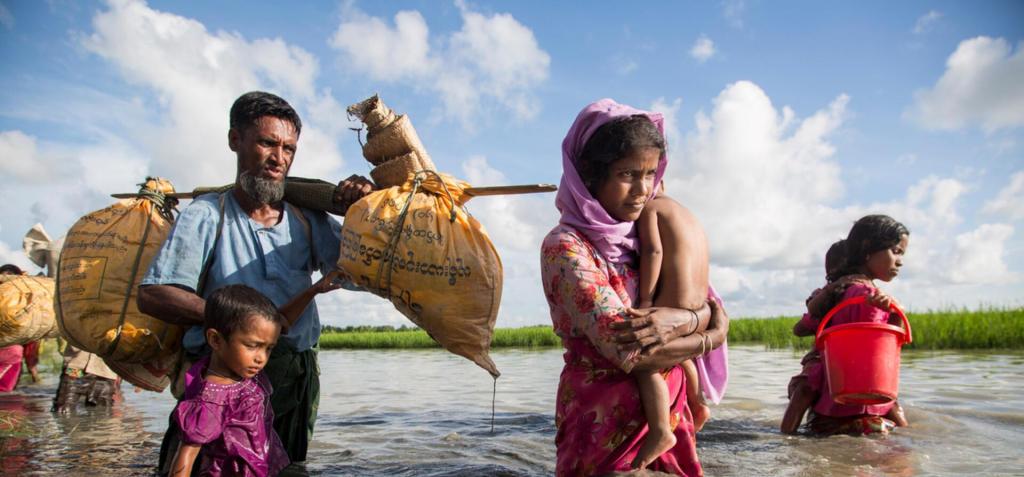
More than 750,000 Rohingya fled Myanmar for Bangladesh following the military crackdown that began in August 2017, joining Rohingya communities displaced during earlier periods of violence and persecution.
According to figures cited from the Government of Bangladesh and UNHCR, the Rohingya refugee population in Bangladesh had reached roughly 1.2 million by late June 2026, with more than 1.16 million living in Cox’s Bazar.
For young refugees, access to education and opportunities beyond the camps remains a major challenge. UNICEF estimated earlier in 2026 that more than 235,000 refugee children aged five to seventeen were out of school, despite education and learning programmes supported by humanitarian organizations and local teachers.
Older Rohingya students face additional barriers in accessing recognized higher education. UNHCR has highlighted the limited pathways available for young refugees to progress from education in the camps into formal higher education.
Hefzu has pursued his studies online and is currently an undergraduate student in business administration at the University of the People, according to the information provided for this report.
For Hefzu, poetry has offered another way to continue learning, teaching, and preserving his community’s voice.
His debut collection places a young Rohingya writer at the centre of his own narrative, recording not only the experience of displacement, but also the language, relationships, dreams, and cultural traditions that continue to shape Rohingya life in exile.
Sources: PEN International, GOB, UNHCR, UNICEF and University of the People.


Leave a Reply