Julie Bishop says more than 1.2 million Rohingya remain in Bangladesh a decade after the 2017 mass displacement, urging sustained international action, humanitarian funding, and accountability
By Arakan Journal Staff – September 28, 2026
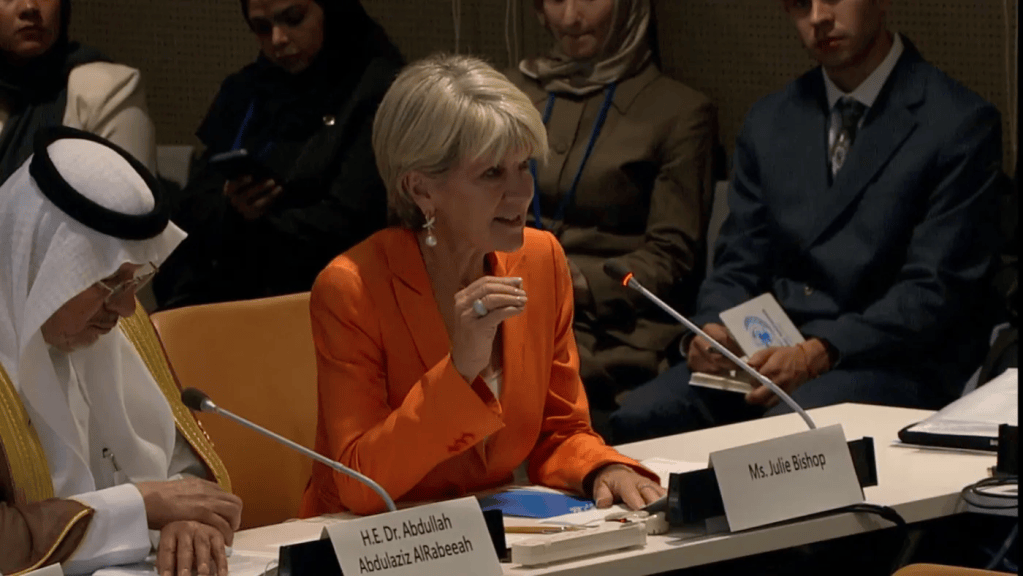
NEW YORK – Nearly a decade after the mass displacement of Rohingya from Myanmar in 2017, the conditions needed for a safe and sustainable return remain absent, United Nations Special Envoy on Myanmar Julie Bishop has warned, calling for renewed international action to address the crisis.
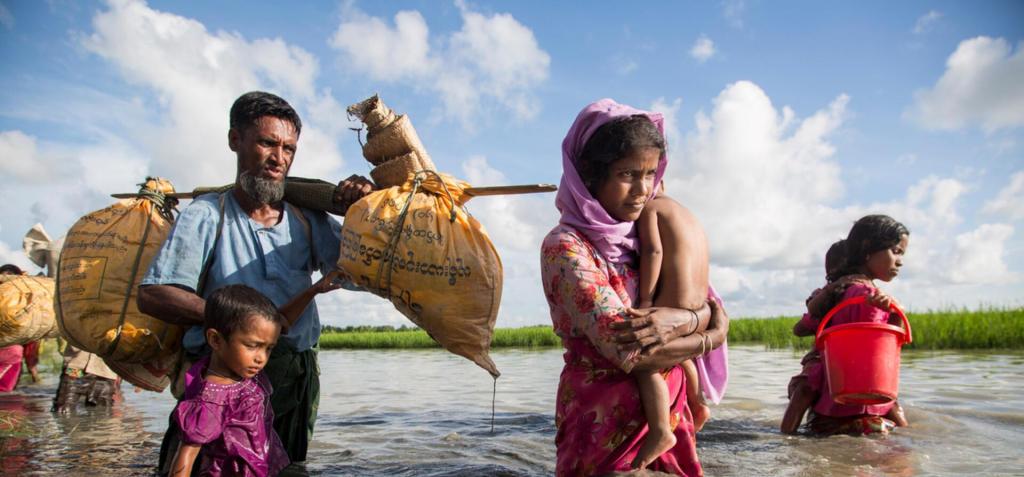
Speaking at a high-level side event of the 81st session of the UN General Assembly in New York on September 23, Bishop said more than 1.2 million Rohingya are currently seeking safety in Bangladesh, where an entire generation has grown up in displacement. The event, titled The Rohingya Crisis: A Renewed Call for a Durable Solution from Protracted Displacement, with justice and accountability, was co-hosted by Bangladesh and The Gambia.
“For a newly born refugee in 2017, displacement is now their entire childhood,” Bishop said, noting that an estimated 30,000 children are born in the camps each year.
Bishop commended Bangladesh for continuing to host the displaced population but warned that declining humanitarian funding is putting essential assistance under increasing pressure. She stressed that humanitarian assistance remains necessary while refugees cannot return, but said aid alone cannot provide a lasting solution.
The UN envoy also linked the worsening humanitarian situation in the camps to developments inside Myanmar. She said the Rohingya crisis originated in Myanmar and that its durable solution lies there, while stressing that any return must be based on genuinely voluntary decisions and adequate protection safeguards.
Bishop raised concern over proposals for bilateral arrangements between Myanmar and Bangladesh on repatriation, pointing to the continuing conflict and the fact that Myanmar authorities do not control all of Rakhine State. According to her remarks, the Arakan Army controls most townships in the state.
She warned against returning Rohingya refugees to conditions where they could face renewed danger.
“Those who support immediate repatriation are ignoring the risks and could set dangerous precedents,” Bishop said. “No community should return to renewed danger.”
The Special Envoy also highlighted growing risks facing Rohingya refugees, including trafficking, forced conscription and dangerous maritime journeys. She said reports of suicide attempts in the camps, particularly involving children, were another urgent warning sign.
“More Rohingya are undertaking dangerous sea journeys. Many have died or disappeared,” Bishop said, emphasizing the need for the international community to uphold the right to seek asylum and the principle of non-refoulement.
The crisis has also placed increasing pressure on humanitarian operations in Bangladesh. At the same UN event, participants warned that funding shortages are threatening lifesaving programmes. The UN transcript noted that the 2026 humanitarian appeal had been reduced to about $710 million, covering minimum lifesaving needs.
Bishop said international attention must not fade as the displacement becomes protracted. She called for continued political engagement, sustained humanitarian assistance and stronger regional cooperation.
Justice and accountability, she added, must remain part of any durable solution. The International Court of Justice is considering The Gambia’s case against Myanmar under the Genocide Convention, and Bishop said the international community should prepare for the forthcoming judgment and its implications.
For Rohingya refugees, the question of return remains connected to safety, dignity, and rights. The UN High Commissioner for Refugees, speaking at the same event, said return should involve not simply crossing a border but being able to live safely, move freely, access education and services, work and have a pathway to citizenship.
Bishop concluded by urging governments and international organizations to maintain political attention, address humanitarian funding shortages and strengthen regional efforts to resolve the crisis.
The UN Special Envoy’s message comes as the Rohingya crisis approaches a decade of protracted displacement, with more than a million refugees still in Bangladesh and conflict continuing inside Myanmar.
Source: United Nations / UN Special Envoy on Myanmar


Leave a Reply